Late school fees: five habits that keep them down before the end of term

In many private schools, the accountant only finds out how much in late school fees has built up when leadership asks for a total just before the end-of-term exams. By then only the worst options are left: calling parents in all at once, holding back report cards, or embarrassing a student who has done nothing wrong. Yet late payment rarely means a family is refusing to pay. Far more often, nobody reminded them at the right time that an installment was due.
How can a school reduce late school fees?
The short answer: to keep late school fees down, give every installment a written due date at the start of the year, give each parent a clear account statement, and send reminders a week before payment is due rather than after. Every week, the accountant reviews late payers by class, and the school accepts part payments and bank transfers so parents do not have to come in.
1. Give every installment a written due date from the start of the year
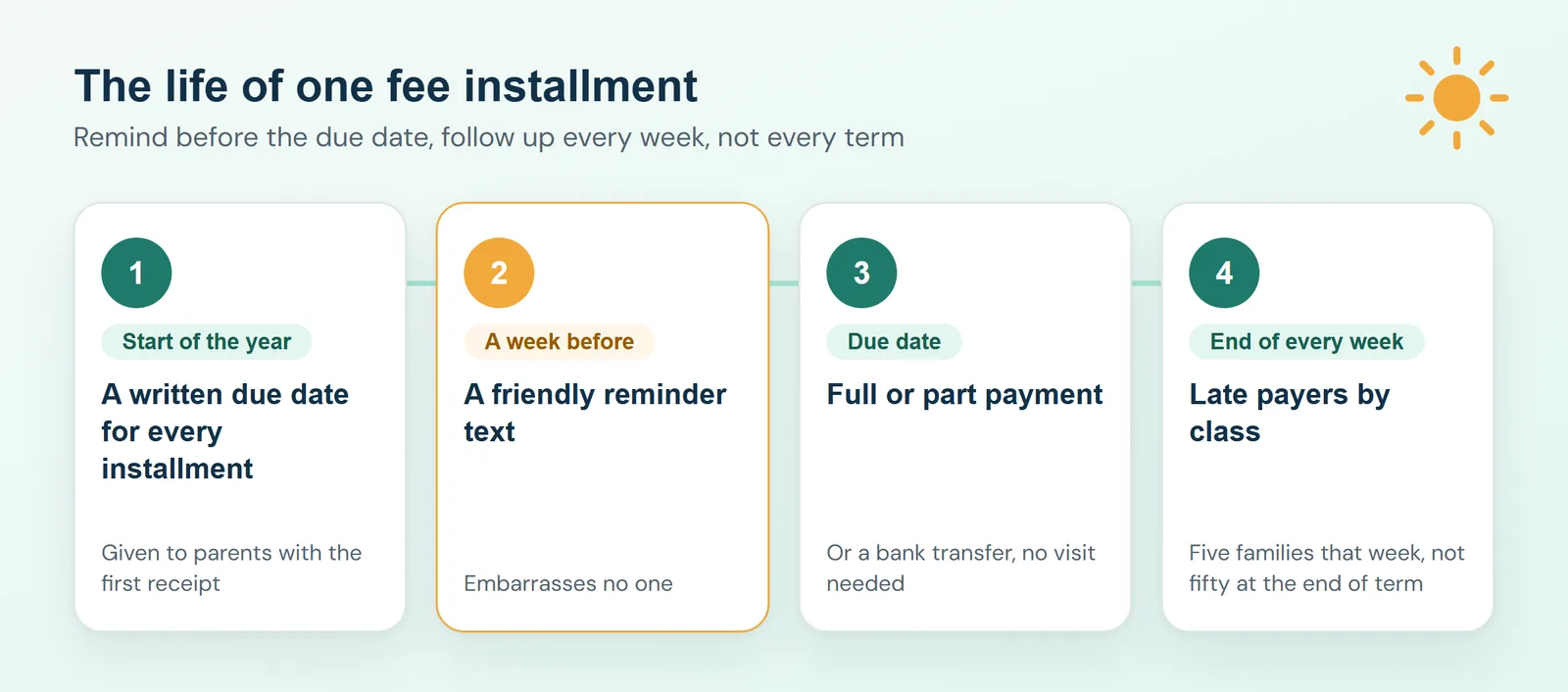
"The second installment is due mid-year" is not a due date. Write down the date each type of installment falls due, and hand it to parents with their first receipt. Once both sides have the date in writing, there is no room for misunderstanding if a payment runs late.
2. Provide an account statement parents can follow
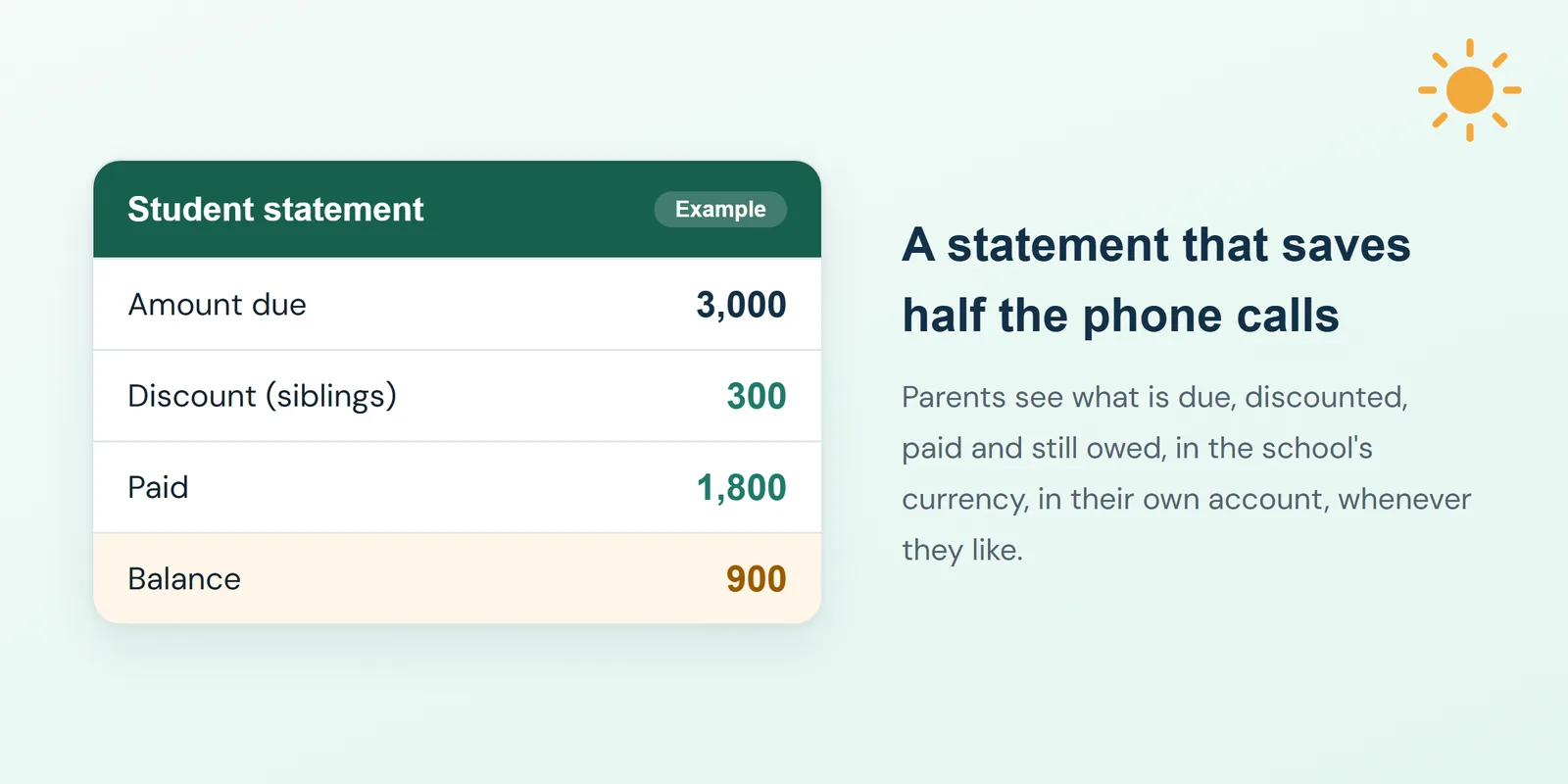
Many disagreements over fees begin because a parent does not know exactly what they have paid and what they still owe. A clear statement showing the amount due, any discount, what has been paid and what remains, which parents can check whenever they like, cuts out half the calls to the accountant.
3. Remind before the due date, not after
A text message that arrives a week before the due date embarrasses no one, and it helps many families pay on time. Send it after the payment is already late, and the conversation about fees becomes an awkward one. These two templates will get you started:
Reminder template before the due date
Your child's second fee installment is due on 1/2, and the balance outstanding is [amount]. The school office.
Reminder template after the due date, without embarrassment
A reminder that your child's second fee installment fell due on 1/2, with [amount] still outstanding. For any questions, please contact the accounts office. The school office.

4. Review late fees every week, not every term
All it takes is for the accountant to go through the list of late payers by class at the end of every week. Contacting five families in the week they fall behind is far easier than chasing fifty at the end of term. Reviewing arrears class by class also shows you why they happen: when a whole class is behind, it usually means its parents were never told when the installment was due.
5. Offer ways to pay that suit families
Not every parent can visit the school during working hours. Accept part payments and record them, and let parents upload a bank transfer receipt for the school to approve, so no one has to make the trip in person. Where your school accepts more than one currency, record each payment in the currency it was actually paid in. The easier it is to pay, the fewer payments arrive late.
What should a school avoid when fees are late?
- Publicly naming or excluding students: a student with overdue fees is never singled out in front of classmates, and never kept out of a lesson or an exam because of a fee.
- Asking the student for the money: fees are discussed with the parent, and only the parent.
- Forgetting discounts: discounts such as sibling discounts, staff children's discounts and scholarships are recorded from the start of the year, so a student never appears to owe money the school never intended to charge.
A weekly checklist for the accountant
- At the end of every week: go through the list of late payers by class and section.
- A week before each due date: send the reminder text to the parents in the class concerned.
- Every day: approve uploaded transfer receipts and record part payments.
- When a whole class falls behind: check that its parents were told the due date.
How does Shams make collecting school fees easier?
In Shams, the school defines its fee types, amounts and due dates, assigns them to a whole class in a single step, and records discounts for each student individually. The accountant takes a payment in full or in part, in any of the currencies the school has set up, and prints the receipt, then opens the list of outstanding balances by class and section and can send a reminder by text message or email straight from that list. Parents see their child's account statement in their own account and upload bank transfer receipts there for the accountant to approve, while the principal keeps an eye on overdue fees by class on the "Today at school" dashboard.
See the fees screens with your accountant
Book a session and bring your school's accountant along. We will walk through a fee structure like yours, from setting due dates to the statement a parent sees at home.